





On this page
Your partner in patient care
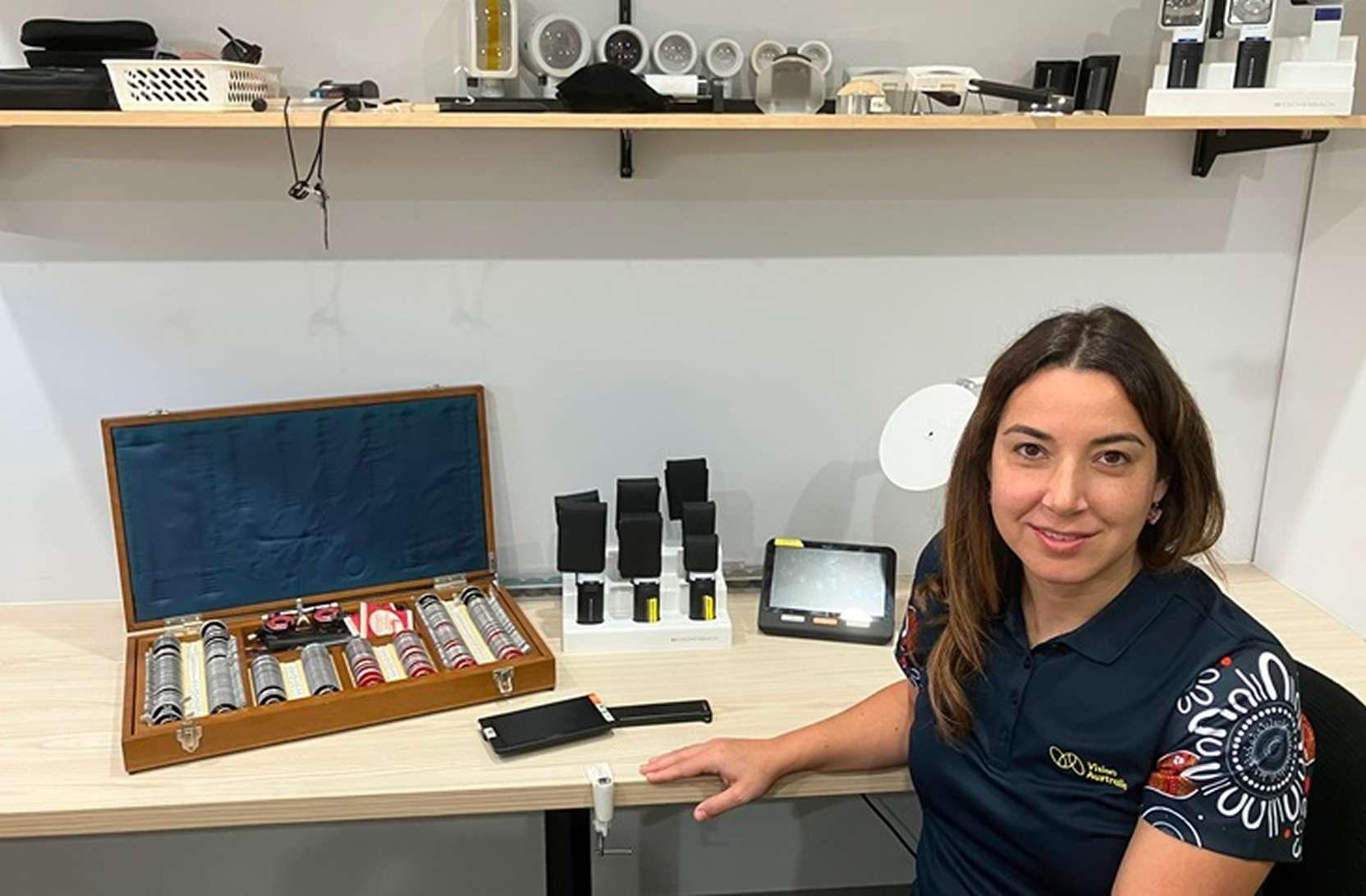
Vision Australia orthoptist Natalie explains how partnering with Vision Australia can make the world of difference for your patients.
Can you tell us about your role as an orthoptist at Vision Australia and how it differs from what people might traditionally expect from orthoptic care?
As an orthoptist working in low vision at Vision Australia, I provide functional vision assessments that focus on how clients use their vision in everyday life. Traditionally, people may be more familiar with orthoptists working in clinical eye care settings, assessing vision and carrying out specialised testing of the visual system to support the diagnosis and management of eye conditions, often working alongside ophthalmologists in busy clinics.
A big part of my role is translating clinical findings into a practical understanding of how someone’s vision affects their everyday life and exploring solutions that may help. Reading is one of the most common reasons people are referred for a low vision assessment. Many clients come to me saying, "I've been told I have the strongest reading glasses available. Is there anything else that can help?" That's often where my role begins.
As orthoptists, we assess much more than visual acuity. We look at how a person uses their vision, including the size of print they can comfortably read, their reading speed, contrast sensitivity, lighting requirements and how fatigue affects visual performance. We then work with individuals to identify tailored solutions such as magnification, improved lighting, electronic reading devices, accessible technology, larger print formats or alternative reading strategies. The goal is not simply to improve vision, but to help people make the most of their remaining vision, maintain independence and continue participating in the activities that matter to them.
What are some of the most common challenges people face after experiencing vision loss, and how do you help them adapt and maintain their independence?
Reading is one of the most common challenges clients report. For many people with conditions such as age-related macular degeneration, difficulty reading is often the first indication that their vision is affecting everyday life. Clients may notice they need brighter lighting, hold material closer, take longer to read, or avoid reading altogether because it has become tiring and frustrating.
The impact of reading difficulties extends well beyond leisure reading. People may struggle to read medication labels, appointment letters, bank statements, menus, shopping lists, product packaging, text messages, information on screens, or important documents. They may also find it harder to recognise faces, read signs in the community, locate items in busy environments, shop independently, or continue hobbies that require detailed vision. Over time, these difficulties can significantly affect confidence, independence and social participation.
How do orthoptists work alongside other Vision Australia specialists to provide holistic support for clients and their families?
Part of my role is helping colleagues understand the functional implications of a person's eye condition and vision impairment. Team members may refer clients for a low vision assessment to support their own interventions or to address goals that are best explored through an orthoptic assessment.
By sharing information and aligning recommendations, we provide coordinated support that helps clients and their families achieve the best possible outcomes.
A good example is a client whose goal is to independently visit a local café with friends. While this may seem like a simple activity, achieving that goal often requires input from several Vision Australia professionals.
As the orthoptist, I would assess the visual aspects of the task, such as reading menus, identifying food items, viewing prices, and managing different lighting conditions. I might recommend appropriate magnification, better task lighting, contrast-enhancing strategies, accessible technology, or portable low vision aids that suit the environment where the task is being completed.
An Orientation and Mobility Specialist may support the client to safely navigate to and from the café, develop route-finding skills, identify landmarks, and build confidence travelling independently within the community.
An Occupational Therapist may assist with practical strategies for ordering food, handling money or EFTPOS transactions, carrying drinks safely, and managing the physical demands of the environment.
By working together, we help the client achieve a meaningful real-world goal rather than simply addressing individual aspects of vision loss in isolation. This collaborative approach ensures that recommendations are practical, coordinated and centred around what is most important to the client.
How can early intervention and support make a difference to a person's quality of life after vision loss?
Early intervention gives people more opportunities to explore solutions before vision difficulties become overwhelming.
Often the most effective changes are relatively simple, but they work best when introduced early. People can learn new strategies gradually and make adjustments as their vision changes, rather than waiting until difficulties have significantly affected their independence, safety or confidence.
Early support also provides reassurance. Many clients are relieved to discover that practical strategies and equipment are available and feel comforted that they don’t have to navigate vision loss alone. From our support they learn that they don’t need to wait until vision loss becomes severe before receiving help.
Accessing support early can help people maintain independence, continue participating in activities they enjoy, and remain engaged in their communities for longer.
When should healthcare professionals consider referring their patients to Vision Australia?
A person does not need to be legally blind or have severe vision loss to benefit from low vision rehabilitation. The key question is whether their vision is affecting their ability to do the things they need or want to do in everyday life. So, I encourage healthcare professionals to focus on functional difficulties rather than visual acuity alone when considering a referral.
Many people referred to me still have relatively good visual acuity but experience difficulty reading comfortably or accessing everyday print, such as books, mail, product labels, paperwork or information on screens. They may also have difficulty continuing much-loved hobbies such as craft and other visually detailed near activities, or completing everyday tasks independently. These functional difficulties are often a stronger indicator of need than visual acuity alone.
If a patient is struggling with reading, using technology, managing household tasks, participating at work or school, enjoying hobbies or navigating their community because of their vision, that's the right time to consider referring them.
Can you tell us about the impact our services can have on our clients?
One of the things I enjoy most about my role is the detective work. Because vision loss affects people differently, understanding how someone uses their remaining vision is often the key to finding an effective solution.
Sometimes the biggest changes come from relatively simple interventions, such as improving lighting, selecting and prescribing the right magnification for a particular task, or introducing electronic magnification. Other times, support may involve helping someone understand their eye condition, adapt to visual field loss, reduced contrast sensitivity or changes in depth perception, and plan for the future.
I've worked with people who wanted to continue reading despite advanced macular degeneration, artists looking for ways to keep painting, crafters wanting to continue crocheting, and children who needed practical classroom strategies to support their learning.
While every client's goals are different, it's incredibly rewarding to see someone regain confidence and continue participating in activities that are meaningful to them. Sometimes success is being able to read the newspaper or a favourite book again, purchase groceries themselves, returning to a much-loved activity like sudoku or bingo.
Seeing those outcomes reminds me that low vision rehabilitation isn't just about what a person can see, but what they are able to do with their vision to support independence, wellbeing and quality of life.
If you could share one message with healthcare professionals about referring patients to Vision Australia, what would it be?
Don't wait until someone has advanced vision loss or is legally blind.
Many people don't mention the difficulties they're experiencing because they assume it's simply part of their eye condition or don't realise support is available. Sometimes all it takes is asking an opening question such as, "Are you finding reading or any everyday tasks more difficult because of your vision?"
That simple question can start an important conversation and connect someone with support that may significantly improve their independence, wellbeing and quality of life.
Even a single assessment can provide useful information and open the door to support options that people may not realise exist.